The Demo Was Flawless. That’s Why We Didn’t Sign.
Photo: Deni Williams from São Paulo, Brasil / Brazil, CC BY 2.0, via Wikimedia Commons
Nobody buys software because a sales engineer can click Next four times without breaking a sweat. You buy because you believe the thing will survive your actual business—the messy imports, the angry customer, the month-end close, the employee who puts emojis in a required field.
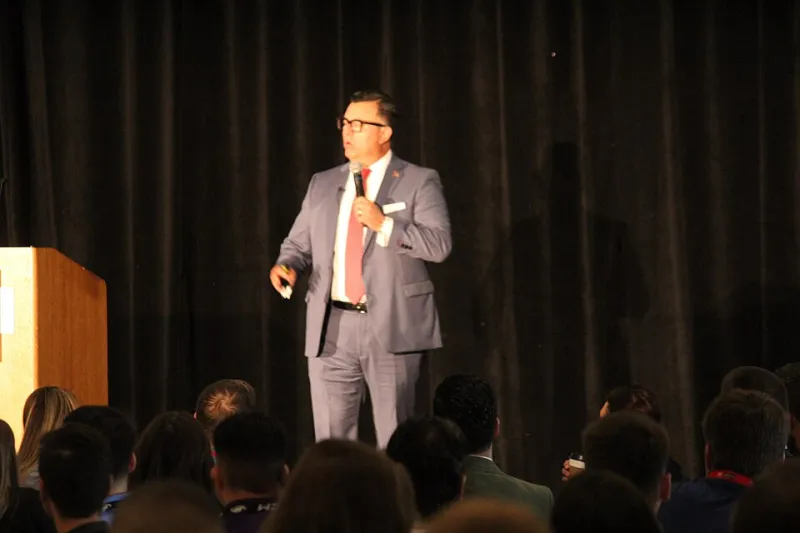
Vendors know this. That’s why the demo is staged. Not always maliciously—sometimes it is just optimized. But optimized for what? For an audience, not for your operations. Your job is to turn the performance into an audition.
If Nobody Types, You’re Watching Theater
Watch the presenter’s hands. Are they typing a new account name, or selecting from a dropdown that was built for the demo? Are they creating a record live, or opening a preloaded one with a name like Acme Test Co.? A real product handles typos, duplicates, permissions, slow networks, and the occasional user who pastes a spreadsheet into a phone-number field.
Ask the presenter to create a record live using your naming convention. Then edit it, change ownership, and delete it. If that makes anyone nervous, you have learned something valuable before the invoice arrives.
Demo environments are often scrubbed worse than a hotel room. Ask for a fresh sandbox or trial tenant that mirrors your setup—not the golden demo database that has been babied since the seed round. The golden database is not a product feature. It is a prop.
Make Them Use Your Ugly Data
Send a sample CSV with bad headers, missing fields, weird characters, duplicate customers, and a few records pulled from your actual edge cases. Watch the import. Ask how conflicts are resolved, what happens to failed rows, and whether the system gives you a useful error log or just a red box that says something went wrong.
Cherry-picked data is the oldest trick in the book. Ask how many records are in the demo. Ask for the largest account the vendor has actually run in production. Ask to see reporting with 24 months of data, not three weeks of confetti. Reports that look instant on 50 rows can turn into a coffee break on 500,000.
Break the Integration, Not Just the Button
“We integrate with X” can mean anything from a native two-way sync to a Zapier template and a prayer. Ask for a live connection in the sandbox. Then trigger a failed auth token. Change a field in the source system. See what breaks, where the error appears, and who is expected to fix it at 2 a.m. on a Saturday.
Ask about scopes, rate limits, retry logic, webhooks, latency, and who owns the field mapping. If the integration is on the roadmap, get it out of the demo and into a contract exhibit. Roadmap is not a synonym for available. It is a synonym for someday, maybe, if enough customers complain.
Edge Cases Are the Product
Most demos show the happy path because the happy path is easy to stage. Real work happens at the edges: time zones, daylight saving, role conflicts, partial refunds, canceled subscriptions, exports after termination, mobile approvals, API limits, and the customer who somehow has two accounts with the same email address.
Pick five scenarios that terrify your team. Make the vendor walk through each one in the sandbox. If the answer is “that’s a custom configuration,” write down the cost. If the answer is “our success team handles that,” ask who signs the SLA and what happens when the success team is at lunch.
Put the Demo in the Contract
Demo-to-contract accountability should be boring. The workflows you tested belong in the statement of work as acceptance criteria. Not “supports reporting,” but “can export a 100,000-row CSV in under X minutes and schedule it weekly.” Not “integrates with Salesforce,” but “two-way sync for account and contact fields within 10 minutes, with an accessible error log.”
Add a pilot or paid proof of concept with exit criteria. Do not accept roadmap promises as substitutes for current functionality. Ask for references from customers with similar volume and similar ugly data—not the logo wall from the pitch deck. The logo wall is marketing. The reference call is evidence.
A Practical Checklist for Demo Day
- Demand a fresh tenant with no demo data and no preloaded happy-path records.
- Require live data entry, edits, ownership changes, and deletes during the session.
- Bring your own dirty CSV and import it while everyone watches.
- Test at least three role and permission conflicts, including a user who should not see something.
- Break one integration on purpose and inspect the error handling.
- Ask for a worst-case dataset and a report that uses it.
- Turn every tested workflow into written acceptance criteria in the SOW.
- Ask who supports the product after the sales engineer disappears.
A good vendor will not flinch at this. A great vendor will welcome it, because they know their software holds up when the lights are bright and the data is ugly. The ones who panic are not selling software. They are selling theater.
At Bad Boy Software, we build software that can take a punch. If your vendor cannot survive a live workflow and your dirty spreadsheet, that is not an implementation problem. That is a buying decision.